Condo & HOA Living · Published September 20, 2026

General rule: the HOA's master policy covers common areas and shared structure — roofs, hallways, shared plumbing risers. Anything that starts inside your own unit is your responsibility, and often your neighbor's, if it starts inside theirs. Where exactly that line sits depends on your declaration and master policy, which is why this trips up almost every condo owner the first time it happens.
Key takeaways
Every condo association's governing documents draw a line between the building's common elements — the roof, exterior walls, hallways, shared plumbing risers — and the space inside each individual unit. The HOA's master policy is built around that same line. Damage to common elements is the association's responsibility to repair, funded through the master policy and HOA dues. Damage that originates inside your own unit, from your own plumbing, appliances, or fixtures, is generally your responsibility, not the HOA's, even though the master policy is what's covering the building you live in.
The confusing part is that a single leak often crosses that line. A supply line failure inside your unit can soak through the floor into the unit below, which is now common-element-adjacent damage even though the source was entirely inside your walls. That's exactly the situation where reading your specific declaration matters more than any general rule.
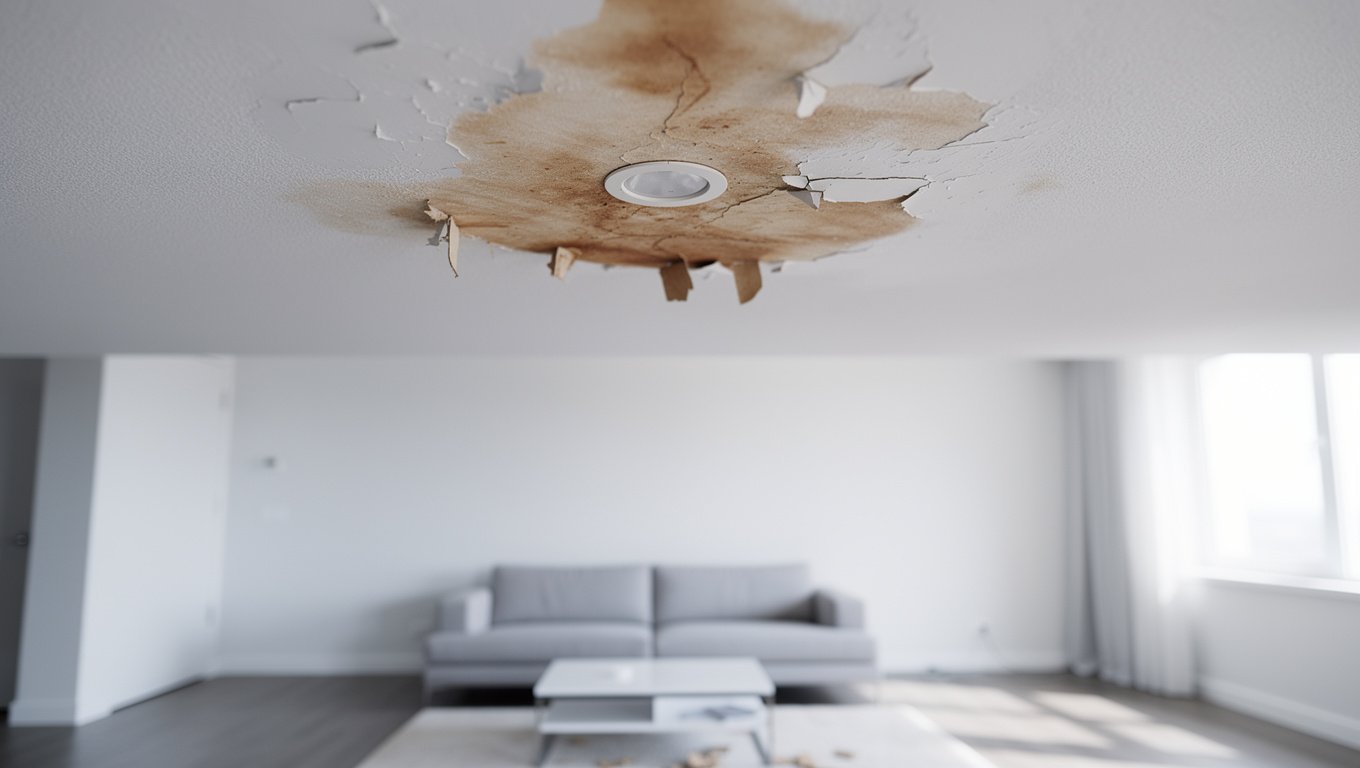
This is the single most common condo water-damage dispute, and it rarely goes the way people expect. If your ceiling is damaged by a leak from the unit above, the instinct is to assume the HOA or the upstairs owner's insurance will simply pay for it. In practice, if the leak originated inside that owner's unit — a supply line, a washing machine hose, a water heater — it's generally treated as that owner's responsibility, and their own condo policy is what responds, not the HOA's master policy.
Your own path to getting made whole usually runs through your own condo policy first: file with your insurer, let them pay for the repair under your dwelling or personal property coverage, and let your insurer pursue reimbursement from the upstairs owner's insurer through subrogation if negligence is involved. That's typically faster than waiting to establish fault directly, and it's exactly what your policy exists for.
How much of your unit's interior the master policy reaches — sometimes called "bare walls," "single entity," or "all-in" coverage depending on the policy type and state — varies enough between associations that it's worth actually reading your HOA's master policy summary rather than assuming a national average applies to yours.
A master policy protects the building. It does not protect you personally, and most HOAs require owners to carry a separate HO-6 condo policy specifically to close that gap. An HO-6 policy typically covers your personal belongings, the interior finishes the master policy excludes, loss-of-use costs if your unit becomes temporarily unlivable, and — critically — your personal liability if a leak that starts in your unit damages a neighbor's. Many HO-6 policies also offer "loss assessment" coverage, which pays your share if the HOA levies a special assessment on all owners to cover a shortfall in the master policy after a major loss.
Most of the disputes above only happen because nobody noticed the leak until it had already spread into a shared wall or the unit below. A cheap point sensor under the kitchen sink, behind the washing machine, and near the water heater catches the kind of slow leak that turns into a common-element dispute if it's left to run for days. It's a small step that keeps the whole question of "whose policy pays" from ever coming up. See our leak detector guide for picks, or the budget and no-hub options if you'd rather not deal with a hub in a condo-sized unit.
FAQ
Only for damage in a common area — shared roofs, hallways, exterior walls, shared plumbing. Damage starting inside your own unit is generally your responsibility.
Usually not directly. If the leak started inside that unit, it's typically that owner's policy that responds, not the HOA's master policy.
Most cover the shared structure and common areas. Interior unit finishes vary by policy type and state law — check your specific declaration.
Yes. The master policy doesn't cover your belongings, excluded interior finishes, or your liability if a leak from your unit damages a neighbor's.