Drying Out After Water Damage · Published September 26, 2026

Is There Moisture Behind My Walls? How to Check, and How Pros Do It
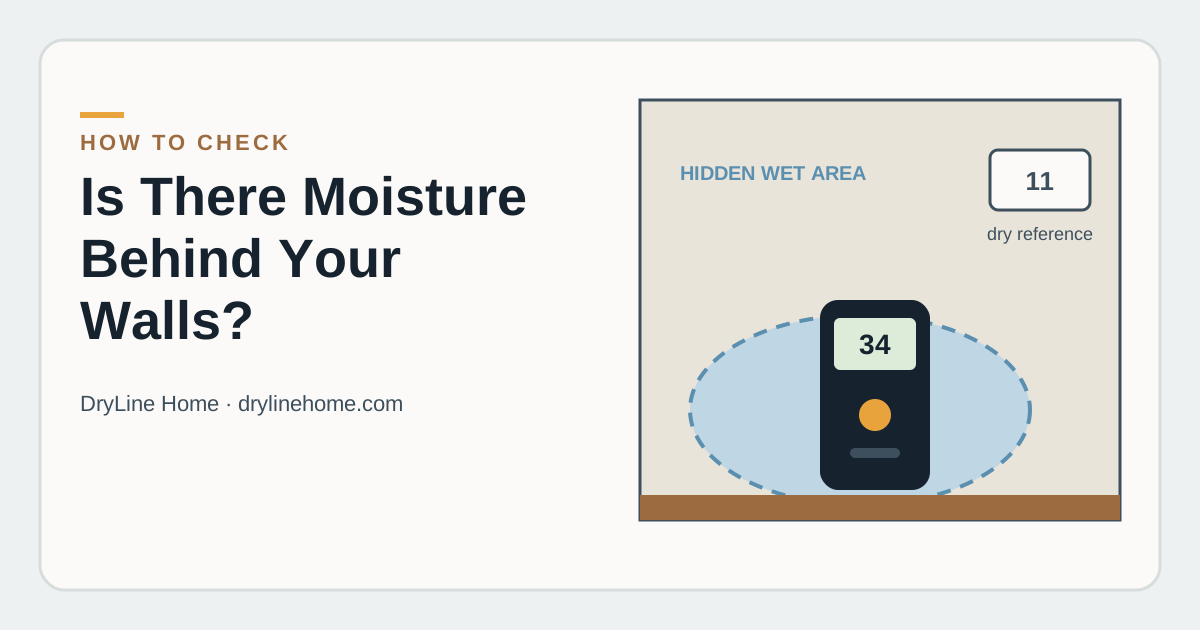
Handheld moisture meter reading high over a hidden wet area of a wall, next to a lower dry reference reading
Illustration: DryLine Home

Water inside a wall almost never announces itself right away. Drywall wicks it upward, insulation holds onto it, and the paint on the room side can look perfectly normal for days. The good news: you don't need to cut holes to find out. A combination of visual signs and a basic moisture meter gets you most of the way, and knowing what the pros use tells you when to call one.

This article contains affiliate links. We may earn a commission at no extra cost to you — see our full disclosure.

Key takeaways

  • Common signs: bubbling or peeling paint, soft or swollen drywall, baseboards pulling away, stains, a musty smell, or a spot that feels cooler than the wall around it.
  • Water gets trapped because drywall wicks it up, insulation soaks it up, and paint or vinyl wallpaper slows it from escaping.
  • Pros use pinless meters to scan, pin meters to confirm, and thermal cameras to spot suspicious areas. A thermal camera alone doesn't prove moisture.
  • Always compare against a dry reference reading from the same material elsewhere in the house.
  • A basic meter usually costs less than $100; call a pro when readings are high across a large area or you can't find the edge of the wet zone.

Signs you might have hidden moisture in your walls

If you don't know where water is coming from in the first place, start with our guide to finding a hidden water leak, which uses your water meter and bill to confirm a leak exists before you go looking for it.

Why water gets trapped inside walls

A wall is basically a hollow box with porous sides. Once water gets in, several things keep it there:

This is why a wall can look dry from the room while the cavity behind it stays wet for a week, and why drying time depends so much on how the wall is built.

How professionals detect moisture behind walls

ToolWhat it doesLimits
Pinless moisture meterScans the wall surface without making holes; reads roughly the first fraction of an inch to about an inch deepMetal (nails, corner bead, foil-backed insulation) can cause false high readings
Pin moisture meterTwo pins pushed into the material give a direct reading at that spotLeaves tiny holes; readings are specific to the material setting
Thermal imaging cameraShows temperature differences; wet areas often look coolerShows temperature, not moisture. Drafts, ducts and missing insulation look similar
Thermo-hygrometerMeasures temperature and humidity, including inside a wall cavity through a small holeNeeds a hole for in-cavity readings
Borescope / inspection cameraLets a tech look inside a cavity through a small holeOnly shows what's visible, not moisture levels

The usual workflow is: thermal camera to spot suspicious areas quickly, pinless meter to scan and find the edges of the wet zone, then pin readings to confirm. A good technician never calls something wet based on a thermal image alone.

How to check walls yourself with a moisture meter

  1. Take a dry reference reading first. Find the same type of wall in a room that was never wet, and note the number on the same meter setting.
  2. Scan the suspect wall with a pinless meter in a grid, starting at the floor and working up, and out to each side, until readings match the reference.
  3. Mark the edge of the wet area with light pencil marks. That boundary is what you'll track.
  4. Confirm with pins in a few spots, ideally low on the wall where a baseboard will hide the holes.
  5. Watch for false highs over screws, metal corner bead, and outlets. If one spot reads high and everything around it is normal, check for metal before panicking.
  6. Repeat daily if you're drying the wall, at the same spots.

On most meters you choose a scale for the material: a wood scale gives an actual moisture-content percentage for wood, while drywall and masonry readings are usually relative. That's exactly why the dry reference matters more than any single number.

Moisture meter vs. hiring a professional: what it costs

OptionTypical costBest for
Basic pin meterRoughly $20–$50Spot-checking wood and drywall after a small leak
Pin/pinless combination meterRoughly $40–$100Scanning walls without holes, then confirming
Professional-grade meterSeveral hundred dollarsContractors and inspectors
Thermal camera or phone attachmentA few hundred dollars and upFinding suspicious areas quickly; still needs a meter to confirm
Professional moisture inspectionVaries widely by area; some restoration companies inspect free when you hire them for dryingLarge or unclear wet areas, insurance documentation, or anything behind tile or cabinets

For most homeowners the math is simple: a meter under $100 is worth owning if you've had a leak, have an older house, or have a basement. Call a professional when readings are high across more than one wall, you can't find where the wet area ends, the water was contaminated, or you need documentation for an insurance claim.

Gear worth having

FAQ

Common questions

How do I know if I have hidden moisture in my walls?

Look for bubbling or peeling paint, soft or swollen drywall, baseboards separating from the wall, stains, a musty smell, or cool spots. A moisture meter compared against a dry reference reading from the same material confirms it without cutting holes.

How do professionals detect moisture behind walls?

They typically use a thermal camera to find suspicious areas, a pinless moisture meter to scan and map the wet zone, and a pin meter to confirm, sometimes adding hygrometer readings from inside the wall cavity through a small hole.

What causes water to get trapped in walls?

Drywall wicks water upward, insulation holds it against the framing, the bottom plate sits where water collects, and paint, vinyl wallpaper, tile or furniture against the wall slow evaporation from the room side.

How much does a moisture meter cost compared with hiring a professional?

Basic pin meters cost roughly $20 to $50 and pin/pinless combination meters roughly $40 to $100. Professional inspection costs vary by area, and some restoration companies include it when you hire them for drying.

Can a thermal camera detect moisture in walls?

Not directly. It shows temperature differences, and wet areas often read cooler because of evaporation, but drafts, ducts and gaps in insulation can look similar. Any suspicious area should be confirmed with a moisture meter.

Related reading

More on this topic