Drying Out After Water Damage · Published September 26, 2026
Often, yes. Drywall soaked by clean water and dried within a day or two usually goes back to normal with nothing more than a touch-up. It stops being worth saving when the water was contaminated, when the board has gone soft or started to crumble, or when mold has already started. Floors follow similar logic, with a lot more variation by material.
Key takeaways
Drywall is gypsum sandwiched between paper facings. Gypsum tolerates getting wet surprisingly well as long as it dries quickly and nothing grows on the paper. It's usually worth drying in place when all of these are true:
Pros often speed things up by pulling the baseboard and drilling a few small holes behind where it sits, so air can be pushed into the cavity. The baseboard hides the holes once it goes back on.
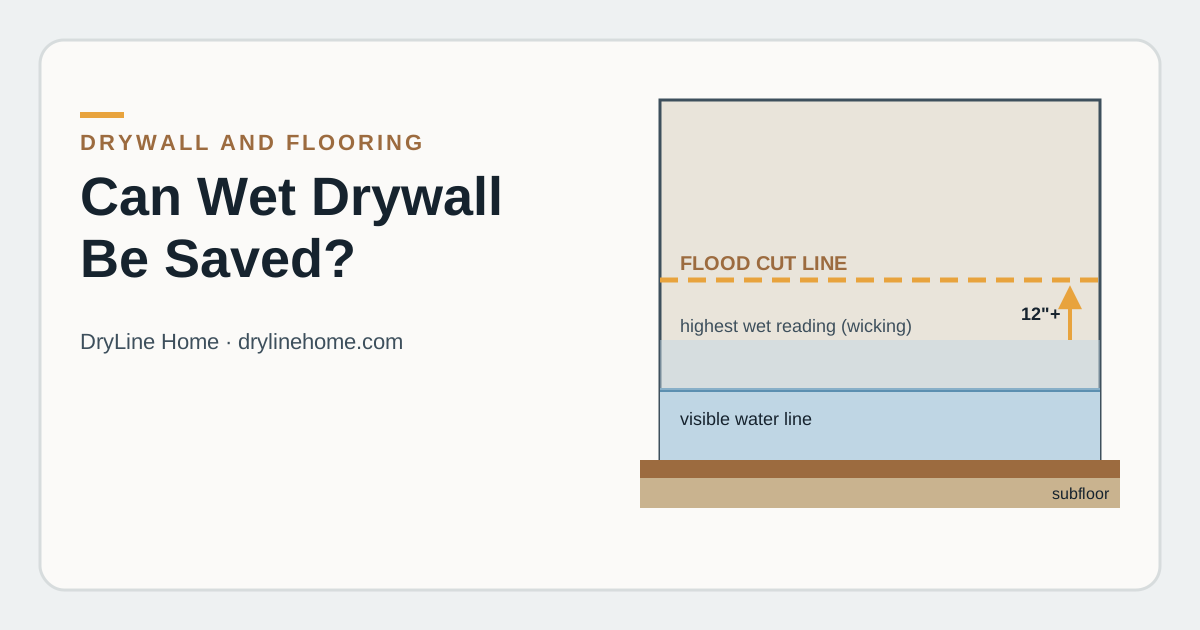
A flood cut is a straight horizontal cut along the wall that removes the wet lower section of drywall, leaving the dry upper portion in place. It opens the cavity so framing and insulation can dry and be inspected, and it's much cheaper than replacing whole walls.
The cut goes above the highest point that reads wet on a moisture meter, not the visible waterline, because drywall wicks water upward. A common practice is to cut at least 12 inches above the highest wet reading, and many crews cut at 2 feet or 4 feet so the replacement matches standard drywall sheet sizes and is easier to patch cleanly. Wet insulation behind the cut is typically removed at the same time.
| Flooring | Usually saved? | What typically happens |
|---|---|---|
| Carpet | Often, with clean water | Extracted, sometimes floated with air movers underneath. Replaced if water was contaminated or it delaminates. |
| Carpet pad | Usually not | It soaks up water like a sponge and is cheap to replace, so it's commonly pulled and discarded. |
| Solid hardwood | Sometimes | Can often be dried with specialty mat systems over one to several weeks. Cupping may flatten as it dries; boards that crown or crack may need replacement or refinishing. |
| Engineered hardwood | Less often | The layered core can delaminate if it stays wet. |
| Laminate | Rarely | The fiberboard core swells and doesn't return to shape. Usually removed so the subfloor can dry. |
| Luxury vinyl plank (LVP) | Plank yes, but... | The planks shed water, but water trapped underneath has nowhere to go. Often lifted so the subfloor can dry. |
| Tile | Usually | Tile itself is fine; the concern is water in the subfloor or backer board beneath it. |
| Subfloor (plywood/OSB) | Usually, if dried fast | Plywood tolerates getting wet better than OSB, which swells at the edges. Has to reach dry standard before new flooring goes down. |
The subfloor is the part people forget. New flooring laid over a subfloor that's still wet can buckle, and the trapped moisture can support mold under an otherwise brand-new floor. Always check moisture readings before anything gets reinstalled.
Kitchen and bathroom cabinet bases are often particleboard, which swells permanently once it absorbs water. Removing the toe kick at the bottom of the cabinet lets air reach underneath and sometimes saves the cabinet if you move fast. Baseboards and MDF trim that have swelled are usually just replaced; they're inexpensive, and pulling them off in the first place helps the wall behind them dry.
FAQ
Drywall soaked by clean water can usually be dried in place if drying starts within a day or two and the board is still firm with no mold. Drywall exposed to sewage or outside floodwater, or that is soft, crumbling or moldy, generally needs to be cut out and replaced.
Above the highest wet reading on a moisture meter, not just the visible waterline. A common practice is at least 12 inches above the highest wet reading, and many crews cut at 2 or 4 feet to match standard drywall sheet sizes.
Carpet can often be dried but the pad is usually replaced, hardwood can sometimes be dried with specialty systems, laminate usually has to be removed, and vinyl plank is often lifted so the subfloor underneath can dry.
Fiberglass batts that got soaked inside a wall are usually removed because they hold water against the framing and dry very slowly. Insulation exposed to contaminated water should always be replaced.
Only after the subfloor reads at the same moisture level as an unaffected area. New flooring over a wet subfloor can buckle and trap moisture that supports mold growth.