Drying Out After Water Damage · Published September 26, 2026

What Is Structural Drying, and When Do You Actually Need It?
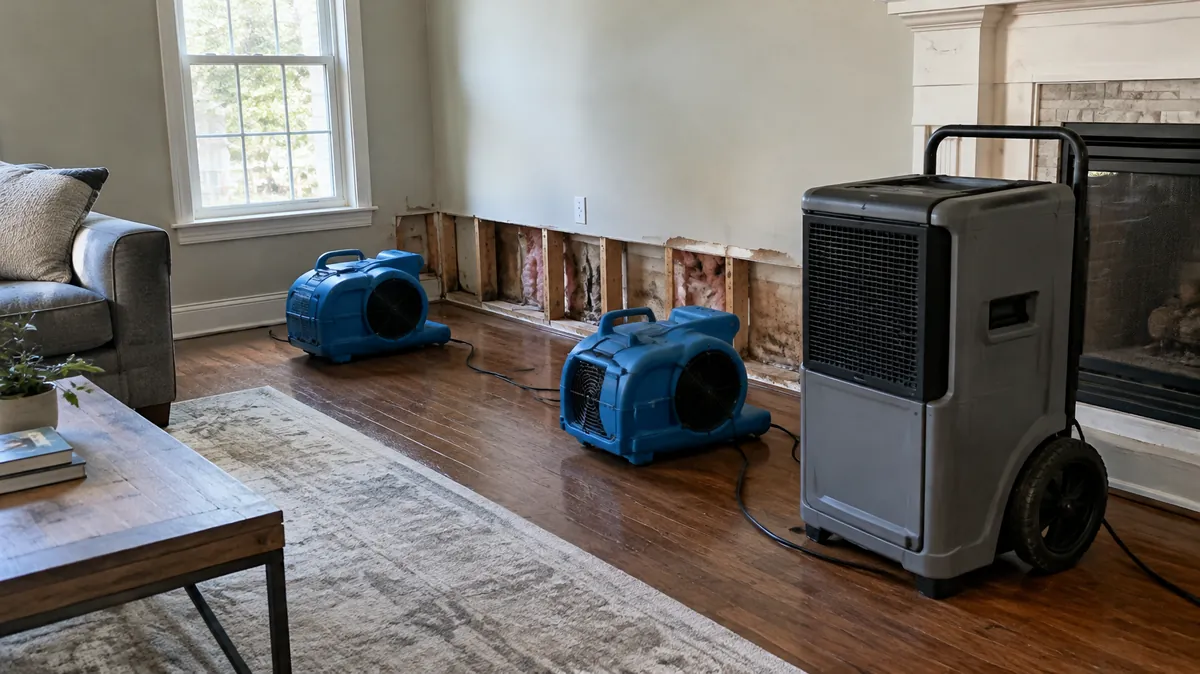
Structural drying in progress: air movers and a commercial dehumidifier drying a living room wall with the baseboard removed

Structural drying means getting water out of the house itself: the drywall, the studs, the subfloor, the concrete. Mopping up the puddle is a different job. If water sat long enough to soak into something rather than just lying on top of it, the building still needs drying after the floor looks fine.

Key takeaways

  • Water removal and structural drying are two separate steps. Extraction takes out standing water; drying pulls out what soaked into materials.
  • It works by evaporation plus dehumidification: air movers speed up evaporation, dehumidifiers take that moisture out of the air, and temperature keeps the process efficient.
  • The three drying approaches are open, closed, and hybrid, depending on whether outside air is dry enough to help.
  • Clean water caught within a day or two is the best case for drying materials in place. Sewage or outside floodwater changes the plan.
  • Drying is finished when readings say so, not when surfaces feel dry to the touch.

Water removal vs. structural drying: why the floor being dry isn't the end

After a supply line bursts or a water heater lets go, the first job is getting the standing water out. Wet vacs, truck-mounted extractors, and squeegees handle that part, and it's the fastest moisture you'll ever remove, because liquid water is far easier to pull out than water that has to evaporate.

The trouble is everything the water touched on its way down. Drywall wicks water upward like a paper towel. Wood framing and plywood subfloor absorb it. Concrete holds it for a surprisingly long time. None of that comes out with a vacuum, and a floor that looks dry can sit on top of a subfloor that's still soaked.

Structural drying is the part that deals with this: deliberately evaporating water out of building materials and removing it from the air until those materials are back to their normal moisture level. In the restoration industry you'll also see it called applied structural drying, or ASD, which is also the name of an IICRC certification course for technicians.

How structural drying actually works

Every drying setup, whether it's a homeowner with a box fan or a crew with a truck full of equipment, is working on the same three levers:

Get all three right and drying moves quickly. Get one wrong, most often by running fans without a dehumidifier, and you can end up spreading moisture around the house instead of removing it.

The three main drying methods: open, closed, and hybrid

When people ask about "the three drying methods," this is usually what restoration pros mean. The difference is where the moisture goes.

MethodHow it worksWhen it makes sense
Open dryingWindows open, outside air carries moisture awayOnly when outside air is warm and genuinely drier than inside. Rare in humid summers or cold winters.
Closed dryingHouse closed up, dehumidifiers remove the moistureThe default for most jobs. Predictable and controllable regardless of weather.
HybridClosed system, with outside air or heat brought in deliberatelySpecific situations where a pro has measured that outside air helps, or specialty heat drying is used.

For a homeowner, the takeaway is simple: opening windows only helps if the air coming in is drier than the air inside. On a humid July afternoon it can slow things down. When in doubt, close up the room and let a dehumidifier do the work.

What equipment structural drying companies use

What types of water damage require structural drying?

Restoration companies generally work from the IICRC S500 standard, which sorts water damage two ways: by how contaminated the water is (category) and by how much wet, porous material is involved (class). Together they decide whether materials can be dried in place or have to come out.

What it meansEffect on drying
Category 1Clean water: supply line, sink overflow, rain through a windowBest candidate for drying materials in place
Category 2Gray water: washing machine or dishwasher discharge, some toilet overflowsCan often still be dried, with more cleaning and less tolerance for delay
Category 3Black water: sewage, outside floodwater, anything that sat long enough to go badPorous materials like carpet pad, insulation and drywall are usually removed rather than dried
Class 1–2Small area, limited wicking up wallsDays, with standard equipment
Class 3Water came from above, soaked ceilings, walls and floorsMore equipment, more monitoring
Class 4Dense materials: hardwood, plaster, concrete, stoneSpecialty drying, often much longer

Categories can also get worse with time. Clean water that sits for a few days in a warm house starts behaving like a contaminated loss, which is one more reason speed matters.

Can structural drying prevent permanent damage?

It can prevent most of it, if it starts fast. Drywall, framing, and many floors that are dried promptly go back to normal with nothing more than touch-up paint. What drying can't do is reverse damage that's already happened: particleboard cabinet bases that swelled, laminate flooring that delaminated, or mold that has already started growing. The EPA's guidance is to dry water-damaged materials within 24 to 48 hours to prevent mold growth, and that window is the real reason restoration companies answer the phone at 2 a.m.

If you're dealing with this right now, our first 48 hours checklist covers the order to do things in, and this guide helps you decide whether it's a DIY job at all.

FAQ

Common questions

What is applied structural drying?

Applied structural drying (ASD) is the restoration industry's term for drying the building itself, meaning drywall, framing, subfloor and concrete, using controlled airflow, dehumidification and temperature. It's also the name of an IICRC certification for drying technicians.

What's the difference between water damage restoration and structural drying?

Structural drying is one stage of water damage restoration. Restoration covers the whole job: water extraction, drying, cleaning, removing damaged materials and rebuilding. Structural drying is specifically the part that gets absorbed water back out of the building materials.

What equipment do structural drying companies use?

Mainly commercial LGR or desiccant dehumidifiers, high-velocity air movers, moisture meters, thermo-hygrometers and thermal cameras, plus specialty systems for drying inside wall cavities and under hardwood floors, and HEPA air scrubbers when contamination is involved.

What are the three main drying methods for water damage?

Open drying uses outside air through open windows, closed drying seals the house and relies on dehumidifiers, and hybrid drying combines the two deliberately. Closed drying is the default for most jobs because it doesn't depend on the weather.

What types of water damage require structural drying?

Any water that soaked into porous materials rather than just sitting on a hard surface, which covers most leaks that reached drywall, carpet, wood floors or a subfloor. Sewage or outside floodwater (Category 3) usually means removing porous materials instead of drying them in place.

Related reading

More on this topic