Drying Out After Water Damage · Published September 26, 2026

What to Do in the First 24 to 48 Hours After Water Damage
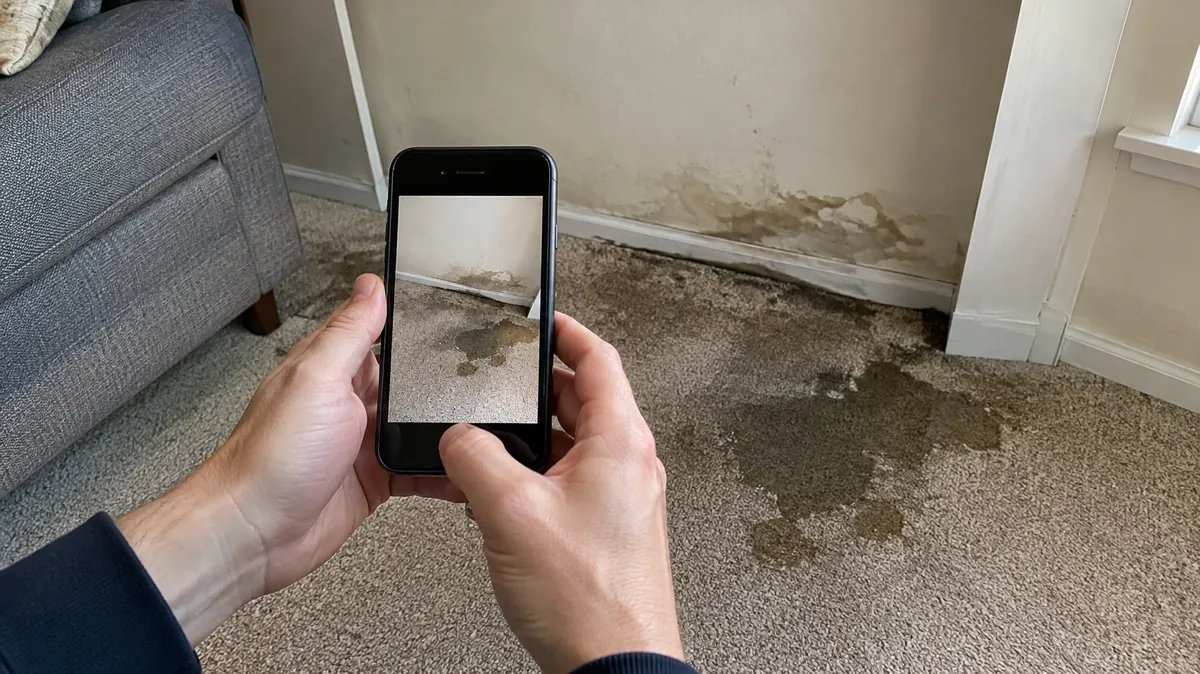
A homeowner photographing water-damaged carpet and a stained wall with a phone to document it

The first two days decide how expensive a water leak becomes. Clean water caught and dried quickly usually means a few days of fans and some paint. The same leak left for a weekend can mean torn-out drywall and a mold bill. Here's what to do, in the order that actually matters.

Key takeaways

  • Safety first: never walk into standing water near outlets or cords, and keep out from under a sagging ceiling.
  • Stop the source at the fixture valve or the main shutoff before doing anything else.
  • Photograph and video everything before you move it. It costs two minutes and protects your insurance claim.
  • Extraction is the fastest drying you'll get. Every gallon you vacuum out is a gallon you don't have to evaporate.
  • Call a drying company the same day if the water was dirty, spread beyond one room, got into walls or ceilings, or you can't get readings trending down within a day or two.

Step 1: Make it safe (the first few minutes)

Step 2: Stop the water

If it's a single fixture, close the supply valve behind the toilet, under the sink, or behind the washer. If you can't find the source, or the valve won't turn, shut off the main water supply to the house. Everyone in the house should know where the main shutoff is before they need it; it's usually where the water line enters the house, often in a basement, crawlspace, garage, or near the water heater.

If this leak is a wake-up call, an automatic shutoff valve does this step for you the next time, even when nobody's home.

Step 3: Document before you touch anything

Before you move furniture or start vacuuming, take wide video of each affected room, then close-up photos of the source, the waterline on walls, damaged flooring, and damaged belongings. Once water is extracted and things are moved, that evidence is gone. Keep damaged items rather than throwing them out until your insurer says otherwise, or at minimum photograph them with something that shows the model or brand.

Then report the loss to your insurer. Most homeowners policies expect you to take reasonable steps to prevent further damage, so you don't need to wait for an adjuster before starting cleanup. Our guide on whether to file a claim covers how to think about the claim itself, and this breakdown explains what's typically covered.

Step 4: Get the liquid water out

This is the single biggest thing you can do to speed up drying. A wet/dry shop vac, towels, and a squeegee remove water far faster than any fan can evaporate it. Don't use a regular household vacuum for this; it isn't built for water and it's an electrical hazard.

Carpet is the exception to easy DIY extraction. A shop vac pulls surface water, but a soaked carpet pad holds a lot more, and professional extraction wands are dramatically more effective. If a large carpeted area got soaked, this is often the point where calling a pro pays for itself.

Step 5: Move things and open things up

Step 6: Start drying, the right way

Close the room off, run a dehumidifier, and aim fans low across wet floors and the base of wet walls. Running the air conditioning also helps pull moisture out of the air in summer. The mistake to avoid is running fans alone in a closed, humid room; that moves moisture around rather than removing it. The details of what to run and where are in our DIY drying guide.

How soon should you call a drying service?

If you're going to call one, call the same day. The EPA recommends drying water-damaged materials within 24 to 48 hours to prevent mold growth, and a drying company needs time to arrive, set up, and start pulling moisture down within that window. Calling on day three means you've spent the most valuable part of the window on guesswork.

Call right away if any of these apply: the water was from sewage or from outside, it reached more than one room, it came through a ceiling, it soaked into walls or under flooring, it sat for more than a day before anyone found it, or you don't have a way to measure whether things are actually drying. For a small clean-water spill on a hard floor that you caught quickly, you can usually handle it yourself.

What not to do

FAQ

Common questions

What should I do immediately after water damage?

Make the area safe, stop the water at the fixture or main shutoff, photograph and video the damage before moving anything, report it to your insurer, then remove as much standing water as possible and start drying with a dehumidifier and fans.

How soon should I call a drying service after water damage?

The same day, ideally within hours. The EPA recommends drying wet materials within 24 to 48 hours to prevent mold growth, and a drying company needs part of that window to arrive and set up.

What's the fastest way to dry out a water-damaged area?

Extract as much liquid water as possible first, since vacuuming water out is much faster than evaporating it. Then close the room and run a dehumidifier together with air movers aimed low across wet floors and walls.

Should I call my insurance company or a restoration company first?

Report the loss to your insurer promptly, but don't wait for an adjuster before starting mitigation. Policies generally expect you to take reasonable steps to prevent further damage, and documenting the damage before cleanup protects the claim.

Should I turn off the electricity after water damage?

If water is near outlets, cords or appliances, yes, shut off power to that area at the breaker, but only if you can reach the panel without standing in water. Otherwise call the utility or an electrician.

Related reading

More on this topic