Drying Out After Water Damage · Published September 26, 2026
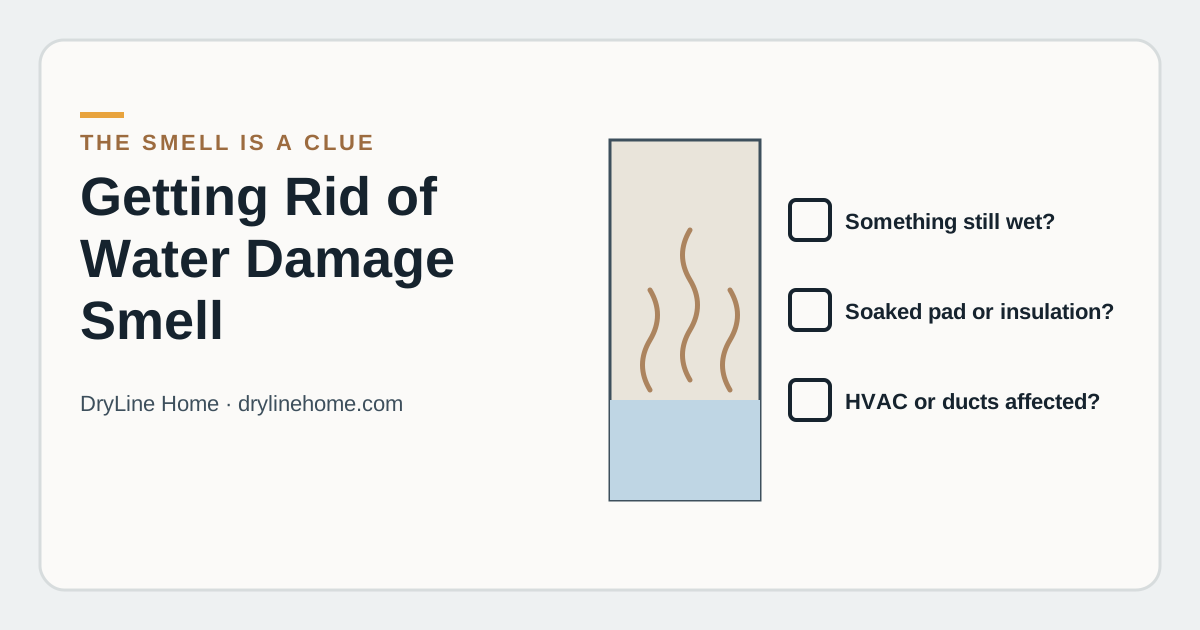
That musty, damp-basement smell is mostly produced by mold and bacteria growing on wet materials. So the smell is less a problem to cover up than a signal: something is still wet, or something that got wet needs to go. Fix the source and the smell goes with it. Mask it and it keeps coming back.
Key takeaways
Fresh clean water doesn't smell like much. The musty odor develops as mold and bacteria start growing on wet materials and give off gases as they do. That's why the smell often shows up on day two or three rather than right away, and why it's strongest in closed, warm, dark spaces like closets, cabinets and wall cavities.
Gray water from a washing machine or dishwasher, and especially sewage or outside floodwater, bring their own smell and their own bacteria from the start. Those odors don't fade with drying alone; the contaminated materials usually have to go.
It should. When a drying job is done right, every affected material is back to its normal moisture level, anything that couldn't be saved has been removed, and hard surfaces have been cleaned. There's nothing left to produce odor, and most homes smell completely normal within a few days of the equipment leaving.
A smell that lingers or comes back after drying is diagnostic. It usually means one of three things: a pocket of moisture that was missed (often inside a wall cavity, under a cabinet, or in the subfloor), porous material that got contaminated and wasn't removed, or the original leak is still slowly going. Get moisture readings in the area where the smell is strongest. Our guide to checking for moisture behind walls walks through it.
Call a restoration or mold professional if the smell persists after you've dried and cleaned what you can see, if it's coming from the HVAC system, if the water was sewage or floodwater, or if you find visible mold across more than about 10 square feet. Persistent odor after an insurance-covered water loss is also worth raising with your adjuster promptly rather than weeks later. More on that in our mold after water damage guide.
FAQ
Find and dry the source, remove soaked porous materials like carpet pad and insulation, clean hard surfaces with detergent and water, launder textiles, check the HVAC system, and only then use ventilation, a HEPA purifier or odor absorbers for leftover smell.
Yes, if the drying reached dry standard everywhere and contaminated or unsalvageable materials were removed. A smell that lingers or returns usually means a missed wet area, contaminated material left in place, or an ongoing leak.
Usually because something is still wet, often inside a wall cavity, under a cabinet, in the subfloor or in carpet pad, or because porous material that got contaminated wasn't removed. Moisture readings where the smell is strongest usually find it.
Not in an occupied home. Ozone is a lung irritant, and the EPA advises against ozone generators marketed as air cleaners in occupied spaces. Restoration professionals who use ozone treat it as a final step in a vacated space after the source is removed.
It can help absorb leftover odor once the wet or contaminated source has been removed and everything is dry. It won't fix a smell that's coming from something still wet.