Buying Guide · Updated September 20, 2026

Best Dishwasher Leak Detectors: Sensors, Pans & Automatic Shutoff
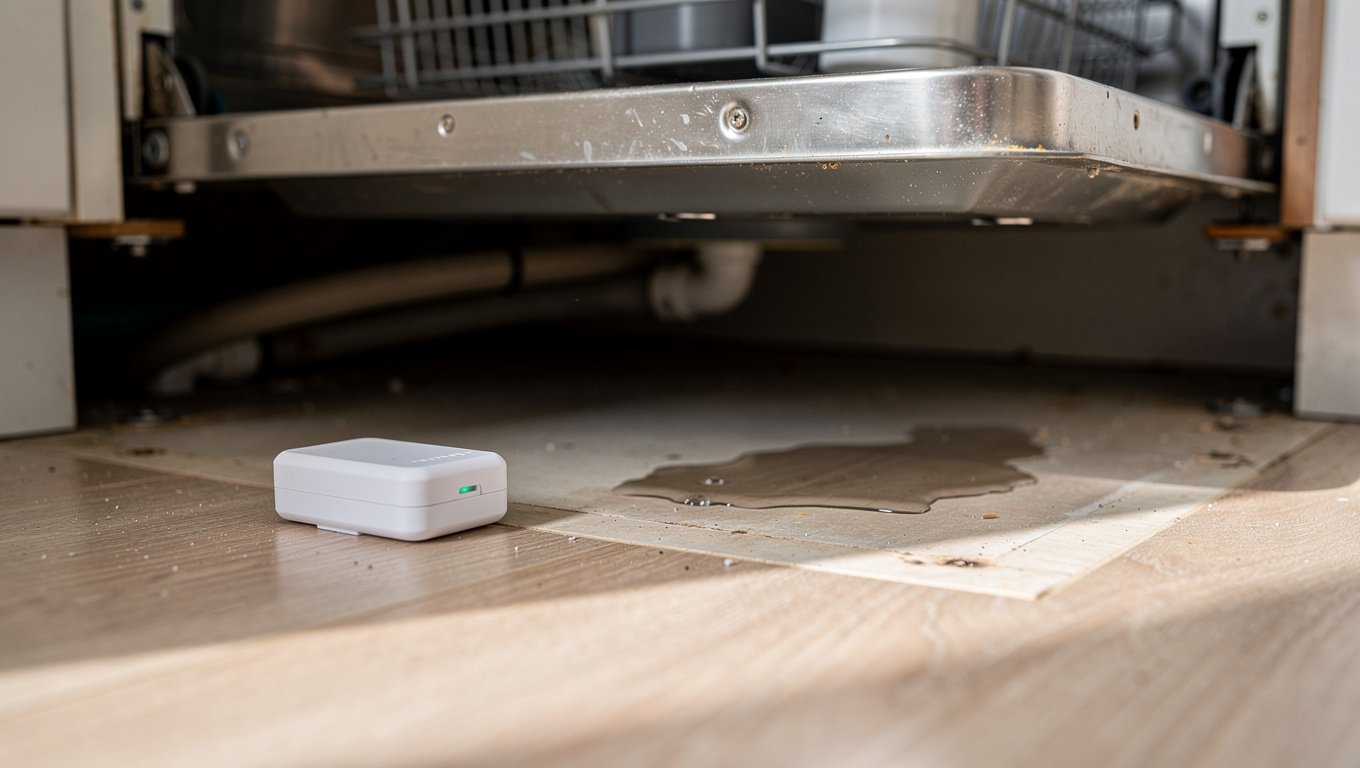
Dishwasher leak detector lying on the cabinet floor under a dishwasher next to a small puddle

Dishwashers rank right behind washing machine hoses and water heaters as a source of hidden kitchen water damage. A leak usually starts small — a worn door gasket, a loosened supply line — and goes unnoticed behind the front panel until the cabinet floor or flooring beyond it starts to warp. A $10–$20 sensor under the unit is usually enough to catch it early.

This guide contains affiliate links. If you buy through them, DryLine Home earns a commission at no extra cost to you — see our full disclosure. Prices and features change; confirm current details on the retailer page.

Key takeaways

  • A battery-powered spot sensor placed directly under the dishwasher catches most leaks — no hub or subscription needed.
  • Placement matters more than the sensor — push it toward the back, where the door gasket and drain hose actually leak from.
  • A dedicated shutoff kit goes further than an alarm — it closes the water supply automatically instead of just alerting you.
  • A leak detector pan only helps if it's paired with a sensor or float switch — a pan alone just delays the puddle, it doesn't alert you to it.

Quick answer

Our top picks

01
Govee WiFi Water Leak Detector
Best Overall for a Dishwasher

Govee WiFi Water Leak Detector

The easiest way to cover a dishwasher without a hub or subscription. Connects straight to 2.4 GHz WiFi, sends a push notification the moment it detects water, and the local alarm is loud enough to hear from another room. Slim enough to slide under the front kickplate, which is exactly where a dishwasher leak first shows up.

  • Hub required?No
  • AlarmLocal + app push
  • Best forMost kitchens — simple setup, no subscription
  • Watch for2.4 GHz WiFi only; needs decent signal under the cabinet
02
SwitchBot WiFi Water Leak Detector
Best Loud Alarm for a Tight Spot

SwitchBot WiFi Water Leak Detector

Claims a 100 dB adjustable alarm and IP67 rating, small enough to fit into the shallow gap under a dishwasher's kickplate where a bulkier sensor won't sit flat. Direct WiFi with no hub, plus app and email alerts — useful if the dishwasher runs a delayed cycle overnight and you want the sensor itself to be the thing that wakes you up.

  • Hub required?No (2.4 GHz WiFi)
  • AlarmUp to ~100 dB local + app/email
  • Best forTight clearance under the kickplate; loud local alert
  • Watch forNotification delay can run 20–60+ seconds by design (battery-saving behavior)

What about a leak detector pan?

A drip pan under the dishwasher can catch a small amount of water and buy you time, but a pan by itself does nothing to alert you — it just changes where the puddle collects instead of announcing that one exists. The pans worth buying are the ones built with an integrated float switch or sensor wired to a shutoff, the same idea as a washing machine drain pan with a float alarm. For most kitchens, a standalone sensor like the two picks above sitting directly under the unit does the same job for less money and less hassle to install.

When to go further: automatic shutoff kits

A spot sensor only warns you — the water keeps flowing until someone shuts it off by hand. If your kitchen sits over finished living space, or you travel enough that "I'll hear the alarm" isn't realistic, a dedicated point-of-use shutoff kit is worth the extra cost and installation effort. FloodStop is the best-known brand in this category: its dishwasher/toilet kit pairs a floor sensor with a motorized valve installed in the supply line, so the moment the sensor detects water, the valve closes and cuts supply automatically, then sounds its own alarm. It costs several times more than a spot alarm and needs to be plumbed into the line rather than just set on the floor, but it actually stops the leak instead of only reporting it.

Search FloodStop kits on Amazon

If you'd rather protect the whole kitchen — sink, dishwasher, and ice maker supply line together — from one main valve instead of appliance by appliance, see our smart shutoff valves comparison.

Where to actually put the sensor

Placement matters more than which sensor you buy. A dishwasher usually leaks from the door gasket, the water inlet valve, or the drain hose connection — all near the floor, toward the front or back of the unit rather than dead center. Slide the sensor as far back under the appliance as the cord or WiFi range allows, since a leak pooling behind the kickplate is exactly the kind that goes unnoticed the longest. If the dishwasher shares a cabinet wall with the sink, a second sensor on that side catches both appliances for the price of one extra unit. For a full room-by-room placement plan beyond just the kitchen, see our sensor placement guide.

FAQ

Common questions

Do dishwasher leak detectors need WiFi or a subscription?

No, not the basic ones. A battery-powered spot sensor works entirely on its own with no app or account. WiFi-connected sensors add a phone notification, but neither type requires an ongoing subscription.

Can a leak detector stop the damage, or does it only warn me?

Most spot sensors only warn you. A dedicated shutoff kit like FloodStop closes an actual valve the moment it senses water, which matters most if you're often not home to respond quickly.

Where should I put a leak sensor for my dishwasher?

Directly under the unit, pushed toward the back where the door gasket and drain hose connection actually leak from — not dead center under the front.

Will homeowners insurance cover a dishwasher leak?

Usually, if it's sudden and accidental. A slow leak that built up over weeks is typically excluded as a maintenance issue — see our full breakdown of leak-related insurance coverage.

Related reading

More on this topic