Guide · Last updated August 4, 2026
For most RV owners, the right setup is simple: a battery-powered puck sensor with a loud local alarm, placed at the water pump, the water heater, and under every sink. That covers the three spots where RV plumbing actually fails. A WiFi or cellular-connected model earns its higher price only if you need alerts while you're away from the rig — parked at a storage lot for the winter, say, or off on a hike while the trailer sits at the campsite. And it's worth saying plainly: plenty of experienced RVers skip detectors entirely and just shut off the pump and shore water connection every time they leave. That's not a bad strategy. It's just a different one, and this guide treats it as a legitimate option rather than something to talk you out of.
Key takeaways
Search "water leak detector RV" on any owner forum and you'll find two camps. One installs sensors in every cabinet. The other points out that if you turn off the pump and close the shore water valve whenever you step away, there's nothing left to leak.
Both are right, depending on how you use the rig. If you full-time, leave the RV parked in storage for weeks, or boondock somewhere your water system runs unattended overnight, a sensor buys you a warning you wouldn't otherwise get. If you're a weekend camper who's always within earshot and diligent about shutting the water off, a detector is a nice-to-have, not a must-have. Where it earns its keep every time: storage periods, since a slow leak behind a cabinet panel can run for months before anyone notices.
Four things actually matter here, and none of them are brand names:
This is the real decision point, and it's worth a table rather than a paragraph of hedging.
| Feature | Local-alarm-only | WiFi/app-connected |
|---|---|---|
| Works with no signal | Yes | No — needs a network connection |
| Remote/away-from-rig alerts | No | Yes |
| Setup complexity | Minimal — just place and power on | Requires app pairing, WiFi credentials |
| Typical cost | Lower | Higher, sometimes with an optional subscription |
| Best for | Weekend campers, boondockers, budget-conscious owners | Full-timers, storage periods, anyone who wants a phone alert |
If you camp somewhere with reliable cell service most of the time, the connected option is genuinely useful. If you spend real time off-grid, you're paying for a feature that won't work when you need it most.
Rather than crown one "best overall" pick — which usually means the reviewer only tested one — here's how to shop by what you actually need.
| Category | Alarm type | Connectivity | Price tier | Best for |
|---|---|---|---|---|
| Simple battery puck | Local, 90-100dB | None | $ | Weekend campers, budget setups |
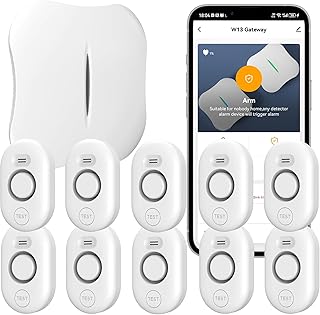
| WiFi/app-connected | Local + push notification | WiFi required | $$ | Full-timers with reliable campground WiFi |
| Multi-sensor kit with hub | Local + app, hub-based | Zigbee/Z-Wave hub, some with WiFi bridge | $$$ | Larger rigs needing 4+ sensors |
| Cable-probe extended sensor | Local, cable up to several feet | Varies | $$ | Hard-to-reach spots like behind a water heater |
A basic multi-pack of battery pucks covers most travel trailers for under the cost of a single tank of gas. Save the connected option for the specific problem it solves — remote alerts — rather than buying it as a default upgrade.
The right starting point for most RVs — no wiring, no app, just place and go.
Check Price
Worth it specifically for storage periods or full-timing with reliable signal.
Check PriceShort version: water pump compartment, water heater, under every sink, and the toilet/black tank connection if you want full coverage. Placement matters more than sensor count — one sensor in the right spot beats three scattered randomly. For the full breakdown by RV type, see our dedicated placement guide.
This is the part most buying guides skip, and it's the part that actually matters once you're driving. Road vibration loosens adhesive-mounted sensors faster than in a stationary house, so check that yours has a secure mounting method — cable ties or a dedicated bracket hold up better than double-sided tape alone over thousands of miles. Temperature swings are the other issue: a sensor left in an unheated compartment through a freeze-thaw cycle can develop condensation inside the housing, which sometimes trips false alarms or, worse, corrodes the battery contacts. If you winterize your rig, pull battery-powered sensors and store them somewhere dry rather than leaving them in a compartment that will freeze.
If you don't own the RV — you're renting one for a trip through a peer-to-peer platform like Outdoorsy or RVShare — a $20–30 battery puck sensor is still worth packing. Rental agreements typically hold you responsible for damage discovered during or after your rental, and a cheap sensor under the sink or by the water heater is a lot less hassle than a damage dispute after the fact.
Related reading
Why offline beats connected specifically for boondocking.
What changes for a compact DIY or converted build.
FAQ
Not always. If you're consistently present and shut off the pump and shore water when you leave, you've already eliminated most of the risk. Detectors matter most during storage periods or full-time, unattended use.
Water pump compartment, water heater, under every sink, and the toilet/black tank connection are the highest-risk spots. See our full placement guide for a zone-by-zone breakdown.
No. Without a network connection, a WiFi-dependent sensor can still sound its local alarm, but it won't send you a remote alert. If you boondock regularly, a local-alarm-only sensor is the more dependable choice.
This varies by model, but most battery-powered pucks last 6 months to a year under normal use. Check the manufacturer's spec and look for a low-battery warning feature.
Basic sensors just sound an alarm. Some higher-end systems pair with an automatic shutoff valve, but that's a separate purchase and installation, not something a standalone puck sensor does on its own.
A pressure regulator prevents damage by limiting incoming water pressure from a campground connection. A leak detector alerts you after water is already where it shouldn't be. They solve different problems and most RVs benefit from both.
Cold can affect battery performance and, in some cases, trigger false alarms from condensation. If you camp or store your rig in freezing conditions, check the manufacturer's operating temperature range before buying.
A basic multi-pack of battery-powered sensors typically costs less than a single night's campground fee. WiFi-connected kits and multi-sensor hub systems cost more, scaling with the number of sensors and features.