Buying Guide · Updated November 3, 2026

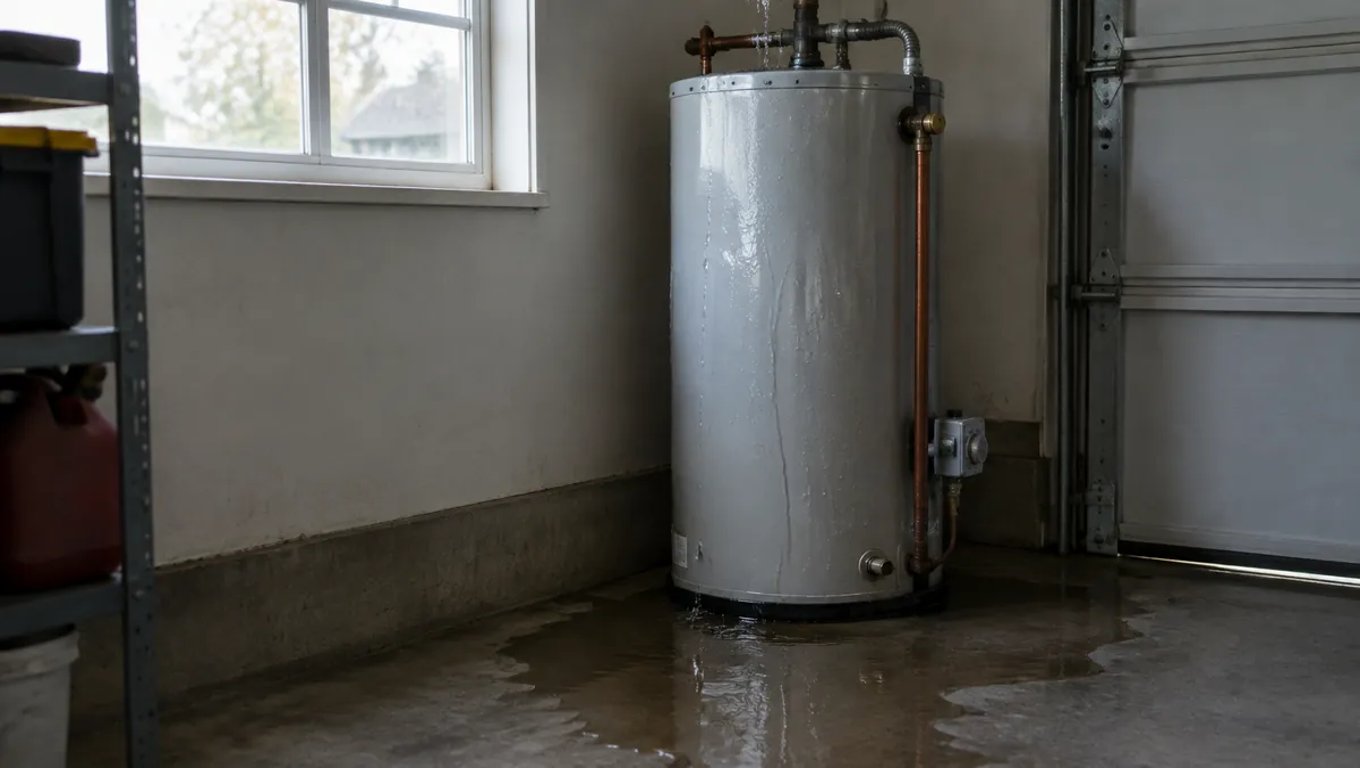
Most tank water heaters last roughly a decade before the steel liner corrodes through, and when one fails it can empty 40 to 50 gallons across the floor. A leak often starts as a slow weep at the base or a fitting, which nobody notices until the flooring or drywall around it is wet. A $20 alarm under the tank, ideally sitting in a drain pan, is the cheapest way to hear about it early.
Key takeaways
Quick answer
A standalone battery alarm sold specifically for water heaters. It sits in the pan or on the floor at the base of the tank and sounds off when water reaches it, with no app, account or WiFi to set up. That makes it a good fit for a basement or garage corner where phone signal is poor and you pass by the heater most days.
If the heater sits in a closet, attic or utility room you rarely visit, a phone notification is worth more than a loud beep. This one connects straight to 2.4 GHz WiFi without a hub and adds a local alarm, so it covers you whether you're home or away.
The only option here that stops the water instead of announcing it. The listing describes a sensor at the base of the heater and a valve that closes when the sensor gets wet, then sounds an alarm. It costs roughly ten times a basic alarm in our check and needs to be plumbed into the line, so it suits heaters over finished space or homes that sit empty for days.
A basic plastic pan that costs about as much as a pizza. It gives a sensor a shallow place to sit and keeps a slow drip off the floor. Camco sells it for electric heaters; for a gas unit, check the heater's manual and your local code on pan materials before buying.
A pan with a drain fitting can carry a leak to a floor drain or outside instead of letting it pool, which matters for heaters in upstairs closets. Aluminum also works for heaters where a plastic pan is not an option. It costs more than the plastic pan and needs a short drain line to be piped.
In many places, yes. Plumbing codes commonly call for a pan wherever a leak could damage finished space, such as an upstairs closet, an attic or a room above living areas, and some local codes extend that to basements. Check yours or ask the installer. Even where it is optional, a pan costs about $20 to $70 and gives a leak sensor a shallow spot to catch water before it spreads. A pan with a drain fitting, like the Oatey above, can also carry a leak to a floor drain or outside. Pans do not alert anyone on their own, so pair one with a sensor.
| Your situation | Start with | Why |
|---|---|---|
| Heater in a basement or garage you walk through | Pan + Flood Buzz alarm | A loud local alarm is enough when someone is around to hear it. |
| Heater in an attic, closet or rental unit | Pan with drain + Govee WiFi sensor | A phone alert reaches you when nobody is near the heater, and the drain line limits the damage. |
| Heater above finished rooms, or home empty for days | FloodStop kit | It closes the supply valve even if no one sees the alert. |
The shutoff kit stops incoming water but does not turn off the heater's power or gas, so a leaking tank still needs to be switched off at the breaker or gas control. If you would rather protect the whole house from one valve, see our smart shutoff valves comparison.
Set the sensor on the lowest point of the pan, or on the floor against the base of the tank if there is no pan. Tank leaks usually start at the bottom seam, the drain valve, the temperature and pressure relief valve discharge or one of the supply connections, so keep the sensor close to the tank rather than across the room. If the heater sits on a stand or platform, put a second sensor on the floor beside it. A drip from a fitting at the top often runs down the outside of the tank before it reaches the pan. For a whole-house plan, see our sensor placement guide.
Wet floor but not sure it is the tank? Condensation from a cold-water line or a gas unit's exhaust can mimic a leak. Our post on water heater leak warning signs explains how to tell the difference.
FAQ
Many local codes require one when a leak could damage finished space below or beside the heater, and it is cheap insurance even where it isn't required. Check your local plumbing code or ask the installer; a pan is most important for heaters in attics, upstairs closets and finished basements.
A sensor placed in the drain pan or on the floor at the heater's base, because that is where tank leaks collect first. Pair it with a pan so there is a shallow reservoir for the sensor to sit in. A WiFi sensor adds a phone alert; a simple battery alarm is enough if you walk past the heater daily.
A basic sensor only sounds an alarm. An automatic shutoff kit such as FloodStop pairs a floor sensor with a valve on the supply line, so it closes the incoming water on its own and then alarms. It does not turn off the heater's power or gas, so you still need to do that yourself.
No. Standalone alarms run on batteries with no app or account. WiFi models such as the Govee add push notifications, and none of the products here charge a monthly fee.
Related reading